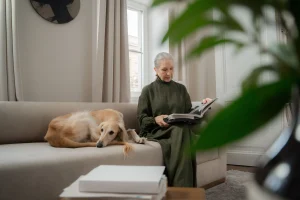

After putting your dog to sleep, you may expect to feel grief. What can be harder to anticipate is how quickly grief can turn into self-questioning. Was it too soon? Should you have waited? Did you miss another option? Perhaps you keep returning to something your dog did on their final day and wondering whether it meant they were not ready.
For some people, guilt after putting a dog to sleep becomes one of the hardest parts of bereavement. Feeling guilty does not, by itself, tell you whether the decision was right or wrong. It can reflect the responsibility you carried when making an irreversible decision for an animal you loved. There may not be a way to remove every doubt. What can help is putting those doubts back into the circumstances that existed when the decision was made, rather than judging yourself only with hindsight.
Why guilt can feel so strong after dog euthanasia
Euthanasia can add another layer to grief because you were involved in deciding when your dog’s life should end.
A systematic review of research into pet bereavement identified guilt as one of the recurring themes described by bereaved pet owners.
Your thoughts may sound like:
- “I should have given them another day.”
- “I waited until things became too difficult.”
- “There must have been another treatment.”
- “I should have noticed sooner.”
- “They seemed happy that morning.”
- “What if they were frightened?”
- “Why do I feel some relief now it is over?”
These questions can feel like proof that something went wrong. They are not necessarily proof.
After your dog has died, you know how the story ended. That makes it easier to imagine alternatives that may have been much less certain when you were actually making the decision.
Put the decision back into its original context
One good memory from your dog’s final days can become disproportionately important after their death.
Perhaps they ate a favourite food. They wagged their tail when you entered the room. They enjoyed a cuddle. You may then wonder how euthanasia could have been appropriate when they were still capable of that moment.
Try widening the picture again.
| When guilt says… | The context worth revisiting |
| “They still had good moments.” | What was most of the day like, not just that moment? |
| “We could have waited.” | What was likely to happen if their condition progressed? |
| “I should have tried something else.” | What realistic treatment options were still available? |
| “I chose the wrong time.” | What information did you and your vet have then? |
| “I let them down.” | Why had euthanasia become a consideration at all? |
You may still feel uncertain afterwards. These questions simply help you judge the decision using the circumstances that existed at the time.
What if you think you put your dog to sleep too soon?
This worry often centres on the possibility of having had more time.
Another day might have contained another cuddle, meal or quiet afternoon together. Remembering that possibility can make any decision feel premature afterwards.
A good moment, however, does not necessarily tell you what your dog’s overall quality of life was like.
Veterinary decisions around euthanasia can involve several factors, including the nature of an illness or injury, available treatments, prognosis and potential quality of life. The RCVS guidance on euthanasia also emphasises considering the individual animal’s welfare and clinical circumstances.
Think back to why the conversation had started:
- Was pain becoming harder to manage?
- Could your dog rest comfortably?
- Had their mobility deteriorated?
- Could they eat, drink and toilet normally?
- Were activities they previously enjoyed disappearing?
- What had your vet explained about their condition and prognosis?
If you are repeatedly questioning the timing, our article about making the decision to say goodbye to your pet may help you revisit the concerns that surrounded that period.
You can also speak with the veterinary team who knew your dog. Asking them to explain the clinical circumstances again may help if grief is making earlier conversations difficult to remember clearly.
What if you believe you waited too long?
Guilt can work in the opposite direction.
Perhaps your dog’s final hours were particularly difficult, and you now think the signs were obvious. You may wish you had made the decision sooner.
Signs that seem clear afterwards may have been much less obvious while your dog’s condition was changing day by day.
There may have been better days among difficult ones. Treatment may have been providing some benefit, or you may have been monitoring a gradual deterioration without knowing precisely when things would change.
If there are things you genuinely wish you had approached differently, you can acknowledge them without making those regrets the definition of your relationship with your dog.
Where medical questions continue to trouble you, the veterinary team familiar with your dog’s condition is better placed to help you understand what was happening than someone who only saw part of the situation.
Feeling relief does not cancel out grief
Relief after euthanasia can create another source of guilt.
You may feel relieved that your dog is no longer struggling. You may also notice that the constant worry has stopped. There may no longer be medication schedules, disrupted nights, mobility support or uncertainty about whether another crisis is approaching.
Research into owners caring for elderly or seriously ill companion animals distinguishes caregiver burden, anticipatory grief and owner quality of life as related but separate experiences.
It is therefore possible to be devastated by your dog’s death while also recognising that an exhausting period of care and uncertainty has ended.
One feeling does not cancel out the other.
What can you do when guilt keeps returning?
You cannot force bereavement to disappear, but there are ways to stop one question or memory from taking over everything else.
Write down what you knew at the time
Record the circumstances that led to the decision while you can still remember them clearly.
You might include:
- changes in your dog’s health or behaviour
- difficulties with eating, moving, sleeping or toileting
- treatments that had already been tried
- what your vet had discussed with you
- what worried you about waiting
- how often comfortable and difficult days were occurring
This is not about proving that you were right.
It gives you a fuller record to return to when one isolated memory starts dominating how you remember the decision.
Examine the ‘if only’ thought
“If only we had tried another treatment.”
“If only I had noticed earlier.”
“If only we had waited until tomorrow.”
When one of these thoughts appears, ask:
Was that alternative realistically available at the time, or is it the outcome I understandably wish could have happened?
There may be questions that never receive a definite answer. Grief sometimes asks for certainty that the original situation could not provide.
Talk to someone who takes the loss seriously
Pet bereavement can feel particularly isolating when other people underestimate how important your dog was to you.
Research involving people following companion animal euthanasia found that social support was among the coping approaches owners reported using.
Look for someone who can listen without minimising your dog’s death or telling you how quickly you should recover.
That might be someone close to you, your veterinary team or a specialist pet-bereavement support service.
Remember your dog beyond their final day

When euthanasia was the last major event you experienced together, it can begin to occupy far more space in your memory than the years that came before it.
Try deliberately remembering the ordinary parts of your dog’s life too.
Think about:
- where they always chose to sleep
- the walk they knew by heart
- a habit that made you laugh
- the people they became excited to see
- photographs from before they became unwell
- the small routines that made them recognisably themselves
Creating a tribute can give those memories somewhere tangible to live.
Our Remembrance Wall is a dedicated space where families can share photographs and words about pets they have lost.
If creating a memorial feels right for you, visit our Remembrance Wall to read existing tributes and consider adding one for your dog.
Remembering those earlier years can help stop the final day from overshadowing the rest of your life together.
What if somebody else questions your decision?
Comments from other people can intensify doubts you were already experiencing.
“They seemed fine when I saw them.”
“I would have waited.”
“I couldn’t have done it.”
Someone who saw your dog occasionally may not have known what nights were like, how much their mobility had changed or what your vet had explained about their health.
Other people may simply hold different beliefs about euthanasia.
You do not have to repeatedly defend the decision.
If you want to understand whether the timing was clinically reasonable, speak with the veterinary professional familiar with your dog’s circumstances rather than trying to settle the question through other people’s opinions.
When grief and guilt are becoming difficult to manage

Pet bereavement does not follow a predictable schedule. Some days may feel manageable before an ordinary reminder brings the loss sharply back.
If guilt, anxiety or low mood is persistently affecting your sleep, work, relationships or ability to manage everyday life, additional support may be helpful.
The NHS guidance on grief and bereavement explains when professional support may be appropriate and where to seek urgent help if you are experiencing a mental health crisis.
Our veterinary surgeon Maya has completed Pet Loss Support training with Blue Cross. For broader information about bereavement after losing an animal companion, our guide to coping with pet loss covers grief and sources of further support.
If grief is persistently affecting your daily life, consider speaking to your GP or a bereavement support service for additional support.
Give the rest of your dog’s life space in your memories
You may never remember putting your dog to sleep as an easy decision. You may still occasionally wonder whether another choice could have given you more time.
When those thoughts return, try to judge the decision using the situation that actually existed then. Remember what you were seeing in your dog’s health and behaviour, what veterinary advice was available and why euthanasia had become something you needed to consider.
Most importantly, leave room for memories that have nothing to do with illness or the final appointment.
The decision mattered, but it was not the whole relationship.