Dogs often carry pain quietly, which is why the early signs can be easy to miss. Many dogs don’t yelp or limp straight away. Instead, discomfort tends to manifest as small changes in behaviour, movement, or routine that accumulate over time.
Because you see your dog every day, you’re best placed to notice those early shifts. In practice, we often hear owners describe it as “not quite right”, especially when pain has been developing gradually.
Why pain in dogs can be hard to spot
Dogs can’t tell us what hurts, so we rely on what we can observe: posture, mobility, facial tension, appetite, sleep patterns, and how they respond to being handled.
Research shows that behavioural changes such as reduced activity, altered gait, and differences in social interaction can be meaningful indicators of discomfort, which is why evidence exploring behavioural signs of chronic pain and welfare impact in dogs is useful for understanding what pain can look like day-to-day.
Pain can be acute (sudden and short-lived) or chronic (long-lasting and often progressive). Both can affect quality of life, even if your dog stays quiet.
Acute pain vs chronic pain: how they look different
Some pain appears suddenly after an injury. Other discomfort develops slowly and is often mistaken for “just ageing”.
| What you might notice | Acute pain (sudden) | Chronic pain (long-term) |
| Onset | Abrupt, often after injury | Gradual, building over time |
| Movement | Limping, guarding a limb | Stiffness after rest, slower pace |
| Behaviour | Restlessness, vocalisation | Withdrawal, less play |
| Appetite | May drop suddenly | May change gradually |
| Handling | Sensitive to touch | Avoids certain movements |
Chronic pain is often easier to miss because dogs adapt. They don’t always stop doing things. They just do less, more slowly, and with more effort.
Common signs your dog may be in pain
Pain rarely shows up as one clear symptom. More often, it’s a cluster of small changes that build into a bigger picture.
Behaviour changes (often the first clue)
A change in temperament is one of the most common reasons owners contact us, and pain is often part of the explanation.
Look out for:
- Becoming unusually quiet or withdrawn
- Seeking more reassurance or attention
- Avoiding touch or moving away when approached
- Seeming irritable or less tolerant than normal
- Losing interest in play or favourite routines
If your dog suddenly “doesn’t want to be bothered”, it may be discomfort rather than attitude.
Movement and posture changes
Movement changes can be subtle at first, especially if your dog is compensating.
Watch for:
- Stiffness after sleeping or resting
- Hesitation on stairs or when jumping up
- Slower walking pace or stopping more often
- Shifting weight off one limb
- A tucked abdomen or hunched back
Even mild stiffness after resting can be an early warning sign that something is uncomfortable.
Signs owners often miss
- Taking longer to settle at night
- Avoiding slippery floors
- Being reluctant to be lifted into the car
- Sitting unevenly or leaning to one side
- Shorter walks, then wanting to go home
These small changes matter, especially when they’re new or becoming more frequent.
Facial expression and body language
Dogs often show pain through tension rather than noise. You might notice:
- Squinting or “tight” eyes
- Ears held back more than usual
- A tense muzzle
- Flinching when you reach towards them
These signs are most meaningful when they appear alongside movement or behaviour changes.
Changes in everyday routines
Pain doesn’t just affect walking. It can affect your dog’s whole day.
Keep an eye on:
- Eating less, eating slower, or dropping food
- Drinking changes
- Sleeping more, or struggling to settle
- Less interest in interaction
A dog who looks fine at first glance may still be having a hard time behind the scenes.
Pain doesn’t always come from the joints
Arthritis is common, but it’s not the only cause of pain. Sometimes discomfort comes from areas you can’t see easily.
A few examples include:
- Mouth pain, which may look like eating more slowly or dropping food
- Ear pain, which may look like head shaking or sensitivity around the head
- Tummy pain, which may look like restlessness or a hunched posture
- Back or neck pain, which may look like stiffness when turning the head or reluctance to jump
This is why patterns matter more than one symptom, and why a veterinary examination is important when signs persist.
Pain and chronic conditions like arthritis
One of the most common causes of ongoing pain in dogs is osteoarthritis. It can be mistaken for “ageing” because it develops gradually, but it has a real impact on comfort and quality of life.
The Bristol Dog Arthritis Study overview of osteoarthritis and common symptoms is a helpful reference if you want to understand why stiffness, reluctance to jump, and slower movement shouldn’t be dismissed.
How to observe at home without making things worse
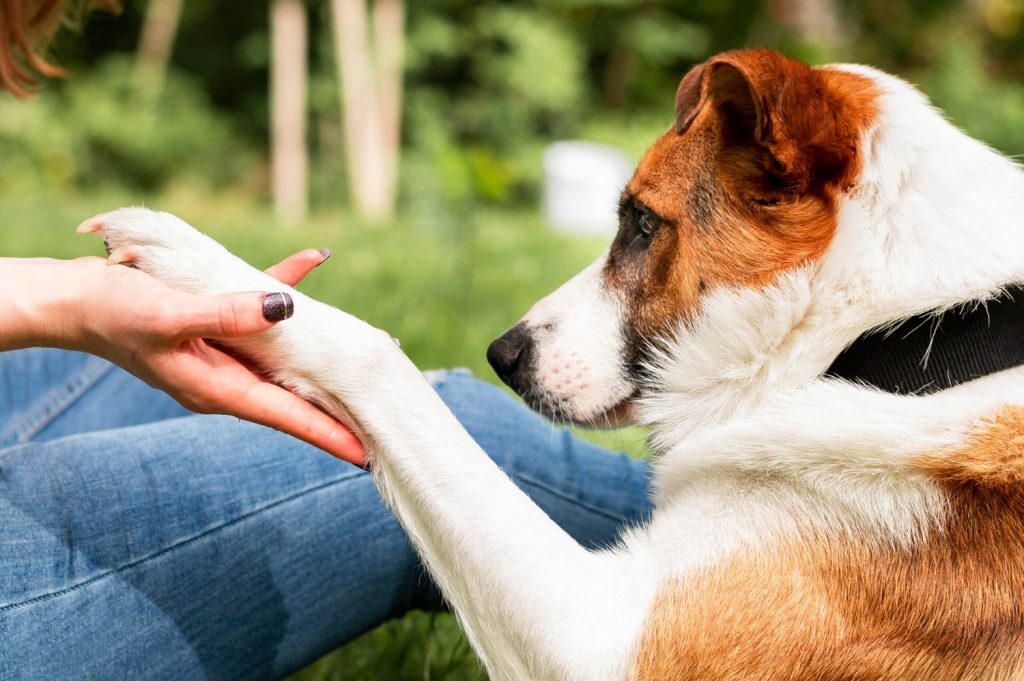
walking or movement.
You don’t need to diagnose anything at home. These checks won’t confirm a diagnosis, but they can help you describe what you’re seeing when you speak to a vet.
Start by thinking about what’s changed:
- Are they slower on walks?
- Are they reluctant to jump or climb stairs?
- Have they become more withdrawn?
- Is it worse after rest, or after exercise?
If your dog is calm, you can gently check:
- Paws and nails for cuts, swelling or warmth
- Legs and joints for sensitivity
- Back and neck for guarded reactions
- Belly and sides for tension
If your dog tenses, pulls away, freezes, or becomes uncomfortable, stop the check and contact a vet for advice. If your dog is growling or may snap, don’t attempt to examine painful areas.
When pain is urgent
Some signs should be treated as urgent, even if you’re not sure what’s causing them.
Seek veterinary help urgently if your dog:
- Collapses or cannot stand
- Has trouble breathing or severe weakness
- Cries continuously or cannot get comfortable
- Develops a swollen, tight abdomen
- Cannot use a limb after an injury
- Deteriorates rapidly over a short period
If your dog seems distressed or worsens quickly, it’s safest to seek urgent veterinary advice.
What not to do (even if you mean well)
When a dog is in pain, the wrong approach can make things worse.
One of the biggest risks is giving human medication. The PDSA guidance on NSAIDs and why common painkillers can be dangerous for pets explains why pain relief should only ever be given under veterinary direction.
Also avoid:
- Forcing exercise to “walk it off”
- Punishing growling or snapping
- Waiting weeks, hoping it will “just get better”
If you’re unsure what’s safe, it’s always better to ask than guess.
When supportive care at home becomes part of the conversation
Most pain is treatable, and many dogs improve with the right support. But when pain becomes persistent despite treatment, quality of life becomes the priority.
For families who feel their dog is most relaxed at home, our home euthanasia service for a calm, supportive goodbye offers a gentle option in familiar surroundings.
If you’re facing difficult decisions and want a clear, compassionate overview, our guide to dog euthanasia and the decision-making process can help you feel more informed.
If your dog’s pain is affecting their quality of life and you want to explore what a calm goodbye at home can involve, visit our home euthanasia service page and reach out when you’re ready to talk.
How we help when you’re not sure what’s going on
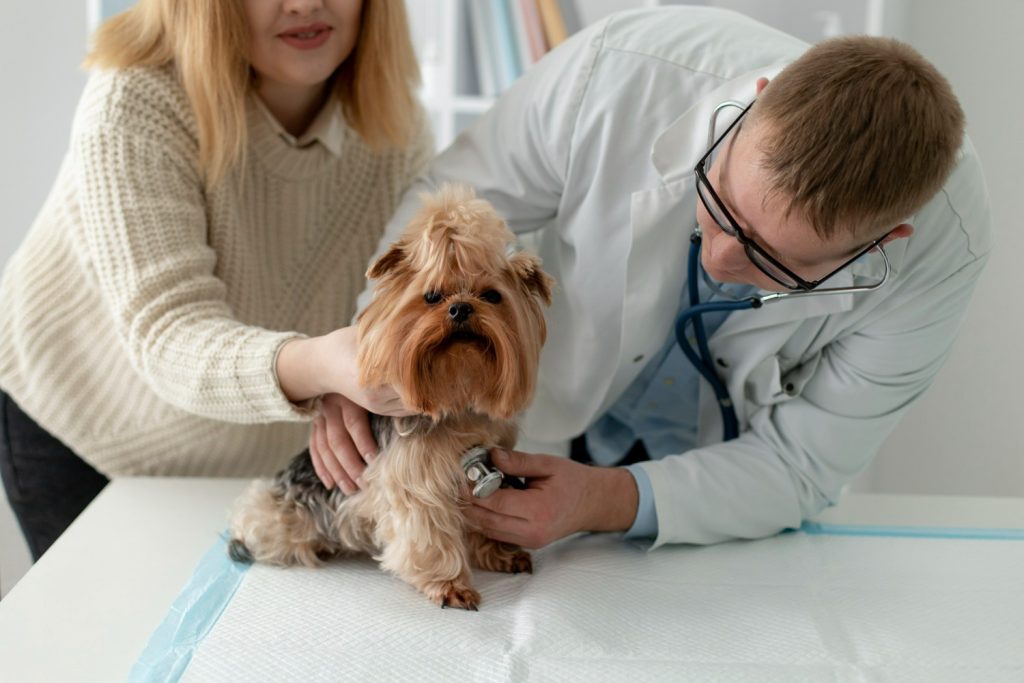
When someone tells us, “I think my dog is in pain”, we take that seriously.
We start by listening to what’s changed, when it started, and how it affects your dog’s routine. We then carry out a careful examination and recommend the next steps based on what we find.
If you’re unsure whether what you’re seeing can wait or needs urgent attention, our FAQs page covering common questions about symptoms and next steps can be a useful starting point.
In summary
Pain in dogs is often subtle and builds slowly rather than appearing as one dramatic symptom. Changes in behaviour, movement, daily routines and body language are all key indicators.
If your dog’s behaviour, movement, or routine has changed, pain should be on your radar. If you’re worried and want to talk it through, our contact page makes it easy to reach the team for advice, and we’ll help you work out what your dog needs next.