Winter in Cardiff and across South Wales often brings cold evenings, damp air and biting winds. While some dogs seem unfazed by the drop in temperature, others quickly become uncomfortable, stiff or reluctant to go outside. Helping your dog stay warm through winter plays a quiet but important role in their comfort, mobility and day-to-day wellbeing.
This guidance is written from a veterinary perspective, drawing on the issues we commonly see in dogs during colder months. It is intended as general advice and cannot replace individual veterinary guidance for your dog’s specific health needs.
Which dogs feel the cold the most?
Not all dogs are affected by winter in the same way. Coat type plays a role, but age, size and underlying health are just as important.
In practice, we often see the following dogs struggle more as temperatures drop:
- Puppies, who find it harder to regulate body temperature
- Older dogs, particularly those with reduced muscle mass
- Small breeds and dogs with fine or short coats
- Lean dogs with little natural insulation
- Dogs with arthritis or long-term health conditions
- Dogs that are underweight or recovering from illness
Cold, damp conditions common in South Wales can increase heat loss, especially during prolonged cold spells, as highlighted in seasonal guidance from the UK Met Office on looking after your pets during colder weather.
Signs your dog may be feeling cold

Dogs do not always show obvious signs of being cold, and early clues are often behavioural rather than physical.
Common signs include:
- Trembling or shivering
- Hunched posture or tucked tail
- Seeking warm spots such as radiators or sunny windows
- Reluctance to go outside or cutting walks short
- Curling tightly into a ball when resting
- Cold ears, paws or belly
For some families, winter highlights changes in comfort or mobility that were previously subtle. If you are starting to notice this shift, our guide to dog euthanasia and the difficult decision involved may help you reflect gently on what is best for your dog.
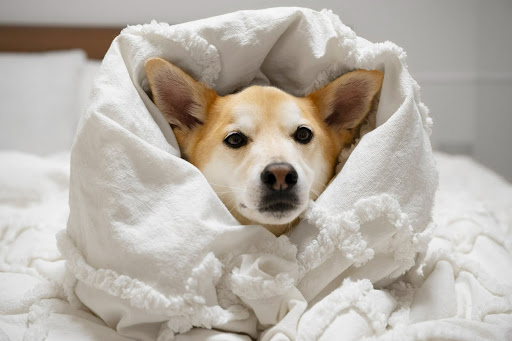
Creating a warmer sleeping area

A warm resting place is one of the most effective ways to support dogs through winter. Dogs lose body heat quickly when lying on cold surfaces or in draughty areas.
Simple adjustments that often make daily life easier include:
- Moving beds away from doors, windows and draughts
- Raising beds off tiled or wooden floors with a rug or foam mat
- Adding layered bedding for extra insulation
- Choosing beds with raised sides to block cold air
- Keeping bedding dry and washing it regularly
Many dogs prefer bedding they can burrow into. In our experience, familiar blankets are often more comforting than replacing the bed entirely.
Using coats and jumpers appropriately
Dog coats can be helpful, but only when used for the right dogs and in the right situations. Some breeds cope well without extra layers, while others benefit significantly.
Dogs most likely to benefit from a coat include short-haired breeds, smaller dogs, older dogs and those that appear reluctant or uncomfortable during cold walks.
When choosing a winter coat, look for:
- A snug fit that does not restrict movement
- Coverage over the chest and belly
- Easy fastenings for dogs with reduced mobility
- Warm, water-resistant fabric for wet weather
- Reflective details for darker afternoons
Avoid coats that rub behind the front legs or trap moisture, as damp fur can make a dog colder rather than warmer.
Adjusting winter walks
Regular exercise remains important in winter, but how and when you walk may need adjusting.
A practical winter approach:
- Walk at warmer times of day, such as late morning or early afternoon
- Shorten walks if your dog struggles, opting for two shorter outings
- Choose sheltered routes to reduce wind exposure
- Dry your dog thoroughly as soon as you get home
- Check paws after every walk for soreness or irritation
Cold pavements, grit and road salt can irritate paws, particularly when followed by time indoors where pads dry out quickly.
Caring for paws and skin in cold weather
Winter conditions can be hard on paws due to repeated exposure to wet ground and cold surfaces.
After walks:
- Wipe paws to remove grit and salt
- Dry carefully between the toes
- Check for redness, cracking or soreness
- Seek advice if licking or discomfort becomes persistent
Addressing minor issues early helps prevent more painful problems later in the season.
Keeping warmth safe indoors
It is completely understandable to want to give your dog extra warmth during winter, but safety matters just as much as comfort.
Safe ways to add warmth include:
- Layered bedding in a draft-free location
- A well-fitted jumper for dogs that feel the cold indoors
- Microwaveable heat pads designed for pets, used with supervision
- Closing doors in the evening to reduce draughts
Avoid electric blankets not designed for pets, hot water bottles that can leak, or placing beds too close to heaters. Dogs should always be able to move away from any heat source easily.
Supporting older dogs and stiff joints
Cold weather can make stiffness and joint discomfort more noticeable, particularly in older dogs. Many owners notice these changes gradually over winter rather than suddenly.
Ways to support mobility include:
- Thick, well-padded beds to cushion joints
- Gentle warm-up at the start of walks
- Shorter, steadier walks instead of long outings
- Non-slip rugs on smooth floors
- Keeping nails trimmed to improve grip
If discomfort increases during colder months, a veterinary check can help identify whether extra support is needed rather than assuming it is simply age-related.
When cold becomes a medical risk
In more severe conditions, prolonged exposure to cold can lead to hypothermia, which is a medical emergency. Signs may include intense shivering, weakness, confusion or collapse. Clinical guidance from PDSA on hypothermia in pets explains when urgent veterinary care is needed.
What matters most during winter
Keeping your dog warm during winter is about thoughtful adjustments rather than drastic changes. A draft-free bed, sensible walk timing, drying off properly and extra support for dogs that feel the cold all contribute to better comfort and wellbeing.
If these changes are bringing up difficult emotions, our guide to coping with pet loss offers gentle support for families facing challenging moments.
When maintaining comfort becomes harder, some families prefer care delivered at home rather than travelling to a clinic. Our home euthanasia service is designed to provide calm, unhurried support in familiar surroundings. If you would like to discuss your dog’s needs or have questions about the available options, you are welcome to contact our team for a quiet and supportive conversation.